
June Skywatch: Solstice, Planetary Encounters & Moon Magic
June Skywatch: Solstice, Planetary Encounters & Moon Magic
Hello, sky-watchers of Latin America and the Caribbean! June brings us the year’s first solstice, some lovely planet–Moon pairings and classic lunar phases. Whether you’re gazing from Quito or Havana, here’s your friendly, day-by-day guide to the month’s highlights. Clear skies!June 1: Mars meets the Moon
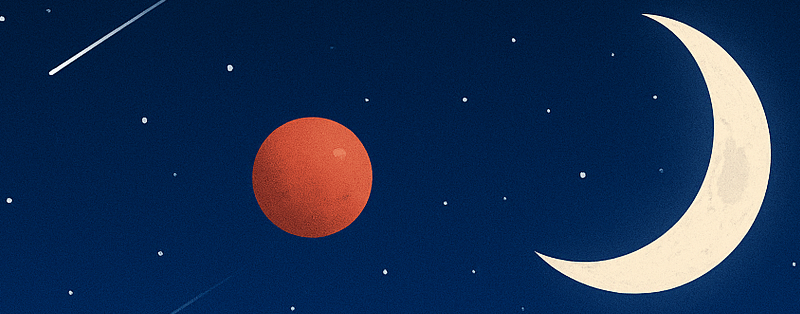
As dusk settles, look low in the western sky to see a thin waxing crescent Moon brushing past ruddy Mars. Binoculars really bring out Mars’s subtle orange hue against the Moon’s bright limb—an enchanting start to the month.June 3: First Quarter Moon
On June 3 the Moon reaches First Quarter, appearing half-illuminated at sunset. This is a perfect time to grab binoculars and follow the terminator (the line between light and dark) for dramatic crater shadows—Copernicus and Tycho are especially striking.June 11: Full Moon
June’s Full Moon rises at sunset on the 11th, flooding the night with silvery light. Sometimes called the Strawberry Moon, it’s a wonderful backdrop for moonlit walks or casual backyard star parties. With binoculars, you might spot the bright rays radiating from young craters.June 18: Last Quarter Moon
By June 18 the Moon has waned to Last Quarter, rising around midnight with its left half illuminated. It lingers in the pre-dawn sky—perfect for late-night observing of lunar valleys, rilles and highlands under soft side-lighting.June 18: Saturn meets the Moon
Also, before dawn on the 18th, the half-lit Moon drifts just north of golden Saturn. Through binoculars or a small telescope, you may glimpse hints of the planet’s rings or a few of its brightest moons.June 21: June Solstice
Mark the solstice on June 21—the Sun reaches its northernmost point, ushering in summer for us in the Northern Hemisphere and winter for observers in the south. It’s the year’s longest day north of the Equator, so rise early if you want to catch that sunrise at its most northerly point on the horizon.June 22: Venus meets the Moon
At dawn on June 22, look low in the east to see brilliant Venus side by side with a slender waning crescent Moon. This “morning star” pairing is one of the month’s prettiest sights—best viewed about 45 minutes before sunrise.June 25: New Moon
The New Moon on June 25 slips into the Sun’s glare, leaving the sky beautifully dark. It’s the perfect window for hunting faint deep-sky objects—galaxies, nebulae and star clusters really shine when moonlight is absent.June 29: Moon occults Mars
Cap off the month with a rare treat: on the night of June 29 the slim crescent Moon will pass in front of Mars, briefly hiding the planet from view. This lunar occultation is visible across much of Latin America and the Caribbean—binoculars or a small telescope will make the disappearance and reappearance especially dramatic.For full details—exact times, viewing tips, and more—please refer to Celestron’s 2025 Celestial Calendar and 2025 Moon Calendar.
Stay tuned for next month’s blog, where we’ll explore July’s celestial highlights. Happy observing!